Blade vs Speed vs Pure Aero: Which Frame Fits You
Walk onto any court at the top of the game and three frame families dominate the racket bags: the Wilson Blade, the HEAD Speed, and the Babolat Pure Aero. They're the three most-played frames in the RacketIndex pro database — and they're not popular by accident. Each is built around a different answer to the same question: how do you want to play tennis? Pick the right family and the rest of your setup falls into place. Pick the wrong one and you'll spend years fighting your own racket.
Wilson Blade — the control frame. Heaviest and most connected feel of the three. For flatter, precision hitters who supply their own power. 50 pros in our database.
HEAD Speed — the all-court frame. The balanced middle: enough plough-through to flatten the ball, enough access to spin to mix it up. 38 pros.
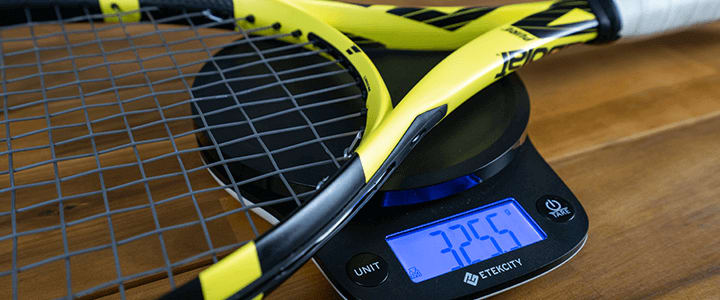
Babolat Pure Aero — the spin frame. Lightest and most launch-happy, built to throw heavy topspin. For the modern western-grip baseliner. 25 pros.
What the tour data reveals
The most honest way to compare these frames isn't the marketing copy — it's the average setup of the pros who actually play them. Pull those numbers from the database and each frame's personality shows up immediately in the specs.
| Frame | Head size | Avg pro weight | Avg pro tension | Character |
|---|---|---|---|---|
| Wilson Blade V9 | 98 sq in | ~310 g | 51.7 lbs | Control / feel |
| HEAD Speed MP | 100 sq in | ~303 g | 50.2 lbs | All-court |
| Babolat Pure Aero | 100 sq in | ~276 g | 48.1 lbs | Spin / power |
Read down the weight column and the story tells itself. The Blade is the heaviest at ~310 g — mass is how control players get stability and plough-through without a trampoline. The Pure Aero is the lightest at ~276 g, because spin players want a fast, whippy frame they can accelerate violently through contact. The Speed sits in between, as an all-court frame should.
Blade vs Pure Aero — the two extremes
The clearest way to understand the trio is to put the bookends side by side. The Blade and the Pure Aero want you to play almost opposite styles of tennis.
The HEAD Speed deliberately refuses to pick a side. It's the frame for the player who wants to flatten a backhand and rip a topspin forehand, who plays all-court rather than camping on the baseline. That versatility is exactly why it's the second-most-played frame on tour — and the safest default if you genuinely don't know which extreme you lean toward.
Which family fits your game
Forget brand loyalty for a moment and answer one question honestly: what does your game already do well, and what does it need from a racket? Match that to the frame's intent rather than to your favourite player's bag.
From family to your exact frame
Picking the family is 80% of the decision. The last 20% — the specific model and the weight/balance variant — is where you fine-tune. Each family has a lighter, more forgiving version and a heavier, more demanding one, so once you know your camp you can dial in the exact frame to your strength and swing.
These three frames have defined the modern game for a reason: between them they cover almost every way there is to play winning tennis. Find the one that matches how you already want to hit the ball, and the racket stops being something you fight and starts being something that fights for you.